
Rental Unit Refresh: Solving Damp Walls with PVC Self-Adhesive Stickers
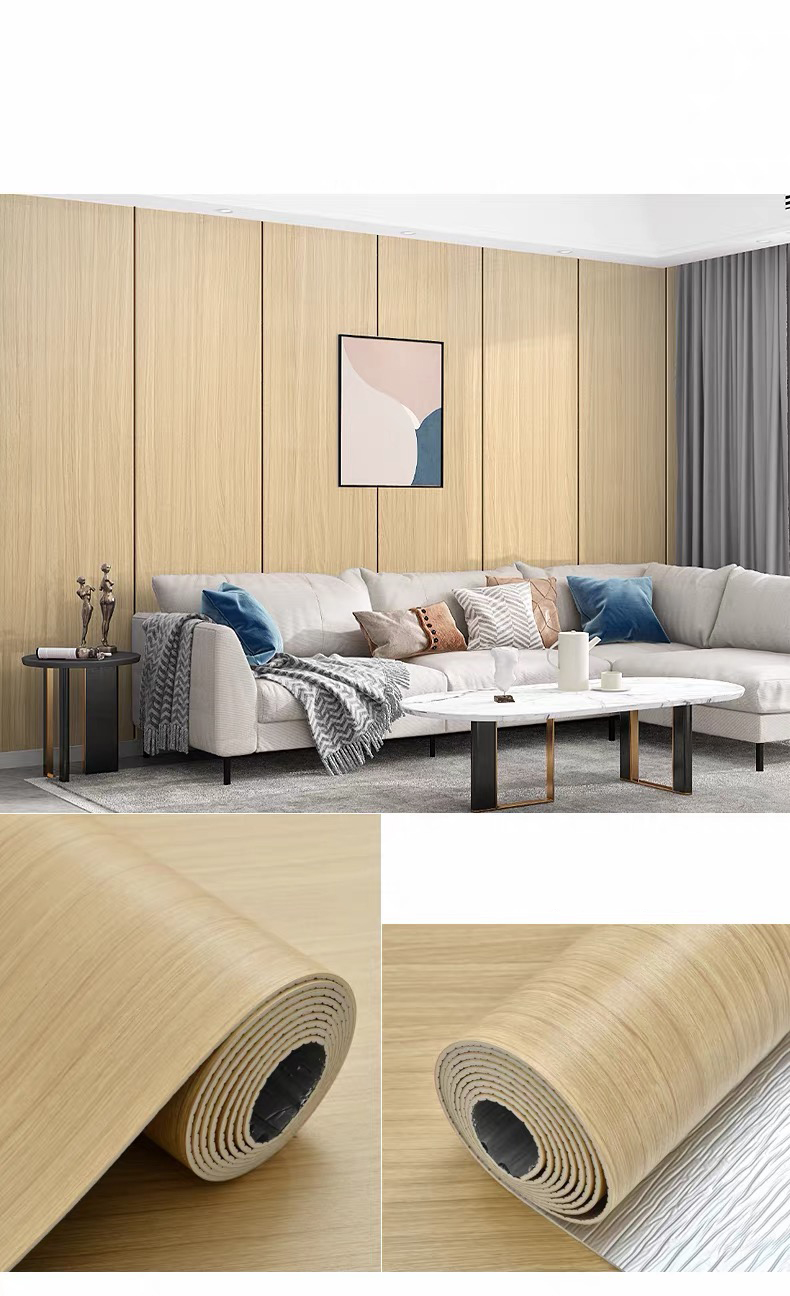
Applying a PVC self-adhesive wall sticker to a clean, dry indoor wall.
Short answer: when a rental unit's walls look damp, stained or tired, PVC self-adhesive wall stickers offer a peel-and-stick cosmetic refresh that can be completed between tenancies without a plaster-and-repaint cycle. The product is a 2.5 mm PVC sheet supplied in 600 mm and 1200 mm widths on 3 m rolls, with waterproof and moisture-resistant performance and patterns that include marble, wood grain, stone, concrete, brick, tile, solid colour and floral. It is a covering for clean, dry, flat indoor walls, not a repair for an active leak, so the moisture source has to be dealt with before any sheet goes up.
Why damp-looking walls are a rental-specific problem
Damp-looking walls rarely fail all at once. They appear as tide marks along skirting boards, patchy discolouration around windows, darkened corners behind furniture, and paint that blisters or powders when touched. In an owner-occupied home the usual response is to strip the finish, let the wall dry out, re-plaster and repaint. In a rental unit that has to be re-let, that sequence is the difficulty: every stage adds drying and access time, and the room cannot be shown while it is opened up.
Turnaround pressure therefore pushes property managers toward local, reversible work on the walls that look worst, usually the hallway, the main bedroom and the wall behind the bed or sofa. Cosmetic renewal of those surfaces can be done without moving plumbing, removing tiles or emptying the whole unit for a building programme. That is the gap the PVC self-adhesive wall sticker is built for: a finished decorative PVC sheet with an adhesive backing and release paper, installed by direct pasting rather than on a keel or with a separate adhesive.
The distinction that matters is diagnosis. A wall that is dry, firm and simply unattractive, stained or faded or marked by furniture and hands, is a cosmetic case. A wall that is damp to the touch, has soft or hollow plaster, or has paint lifting from the substrate is a building-fabric case, and covering it will not solve the cause. The product's installation guidance requires a flat, clean, dry surface free of dust, and states that loose, uneven or damp walls lead to insufficient adhesion, blistering and falling off. This article deals with the cosmetic case, and with the checks that stop a cosmetic job from being mistaken for a repair.
What PVC self-adhesive wall stickers are
A PVC self-adhesive wall sticker is a decorative PVC sheet with adhesive on the reverse and release paper on the back, supplied in roll form. It sits in a different category from rigid decorative panels: the sticker is flexible and lightweight, and it is installed by hand rather than on a fixing system. YIKE NEW MATERIAL (Haining Yike New Material Co., Ltd.) is a China-based manufacturer and exporter of PVC and WPC decorative building materials, founded in 2019, operating a 10,000 m² factory with 50 employees, a 10-engineer R&D team and an annual output of 5,000,000 m². The company's product range covers PVC ceiling panels, PVC wall panels, PVC marble and UV marble sheets, WPC wall panels, outdoor WPC wall panels, PVC decorative panels and PVC self-adhesive wall stickers.
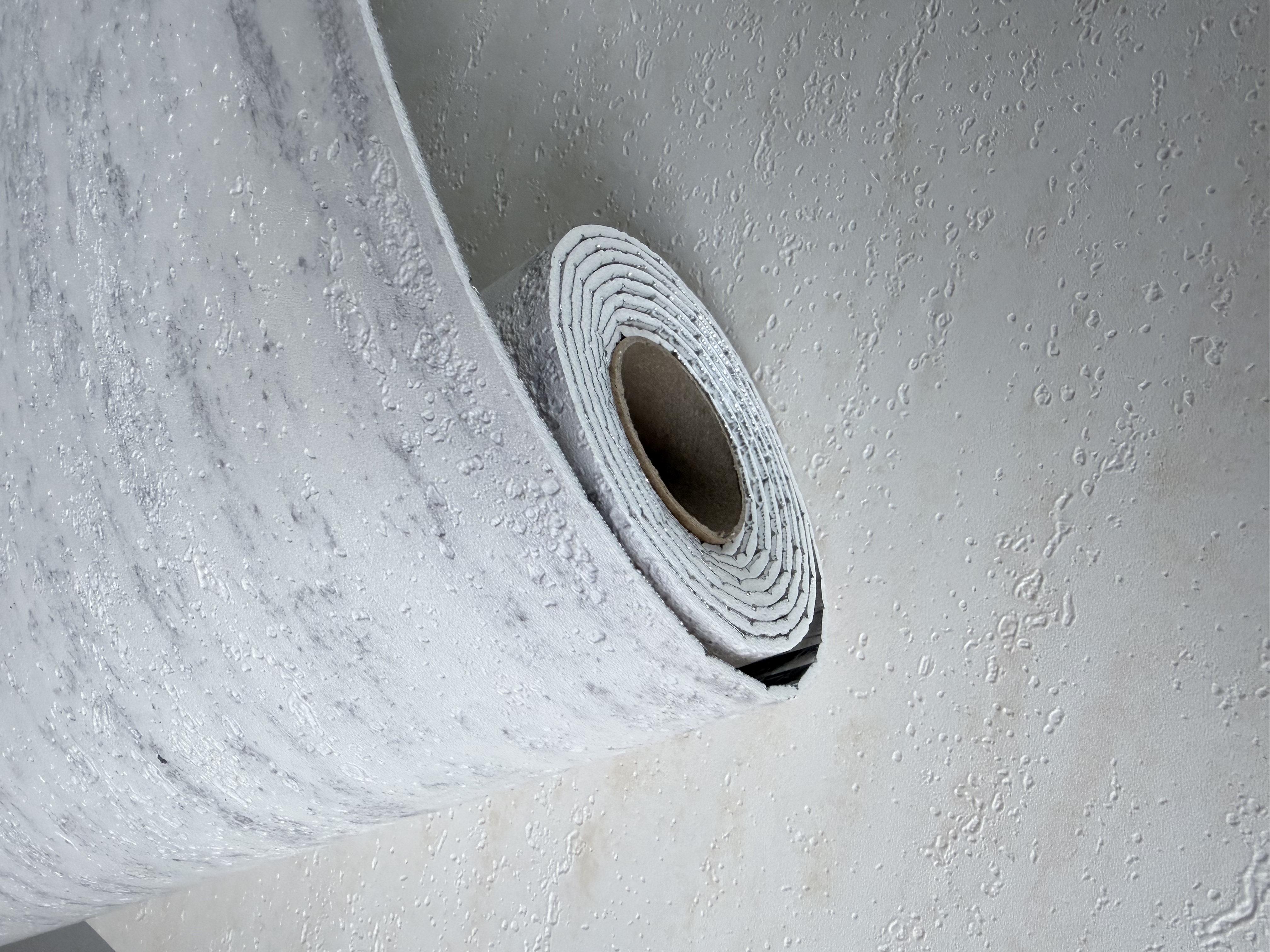
A roll of PVC self-adhesive wall sticker with a decorative surface finish.
The documented specification is narrow and checkable, which helps when a buyer has to compare quotations from more than one supplier:
- Material: PVC
- Thickness: 2.5 mm
- Width: 600 mm and 1200 mm
- Roll length: 3 m
- Models: YK-1200*3000mm and YK 600*3000mm
- Surface finish: glossy, matte and embossed
- Patterns: marble, wood grain, stone, concrete, brick, tile, solid colour and floral
- Indoor service life: 5 to 10 years
- Customisation: OEM and ODM supported, including colour, pattern and logo
Roll format drives how a job is planned. Calculated from the stated dimensions, a 600 mm by 3 m roll covers 1.8 m² and a 1200 mm by 3 m roll covers 3.6 m². Those figures are arithmetic on the listed width and roll length, not a manufacturer coverage guarantee, and they do not account for overlap, pattern alignment or trimming waste. In use, the 1200 mm roll reduces the number of vertical seams across a broad wall, while the 600 mm roll is easier to handle on short runs, door reveals and narrow alcoves.
The material's documented properties explain why it suits fast interior work: it is waterproof and moisture resistant, oil and stain resistant, easy to clean, lightweight and flexible, and removable without damaging the wall. That last property is the one that matters most in a tenancy, and it carries a condition. Removal without damage assumes a sound substrate and a normal service period under suitable indoor conditions, which the FAQ at the end of this article addresses directly.
Matching the product to a rental scenario
The documented project fit for this product is rental property upgrades, apartment refurbishment, DIY home renovation and retail decoration, in indoor enclosed spaces with clean, smooth wall surfaces, normal ambient temperature and a dry environment. Four situations recur inside that envelope.
Between-tenancy apartment refresh
The typical job is a one or two bedroom flat where the walls are structurally sound but marked. Full-height runs on a chimney breast, the wall behind the bed and the hallway wall are the highest-visibility surfaces and the ones that appear in listing photographs. Because the sticker is applied directly and trimmed at the edges, the work can be scheduled after the outgoing tenant leaves and before the next viewing, using hand tools rather than a specialist trade.
Dry bathroom and kitchen walls
Waterproof and moisture-resistant performance makes the sticker relevant to bathroom and kitchen walls that are wiped regularly but not continuously wet. The line is drawn at the shower zone: the documented guidance does not recommend the product for continuous water contact, because long-term water immersion causes edge warping and peeling. Kitchen walls that are cleaned with a damp cloth are a better fit, since the surface is documented as oil and stain resistant and easy to clean.
Small commercial and store interiors
The same material is listed for store fit-out, office decoration and retail decoration. For a shop unit or small office on a short lease, a patterned wall behind a counter or a solid-colour wall in a corridor can be renewed as a local task rather than as a building programme, which keeps a trading space closer to normal operation while the work is done.
Hotel, guesthouse and office touch-ups
Guest rooms and small offices develop repeated marks at luggage height, chair rails and door reveals. A roll format lets a maintenance team renew one wall at a time, using the same pattern from stock, instead of treating the whole room as a single repaint. This is the practical value of a roll: the unit of work becomes a wall, not a room.
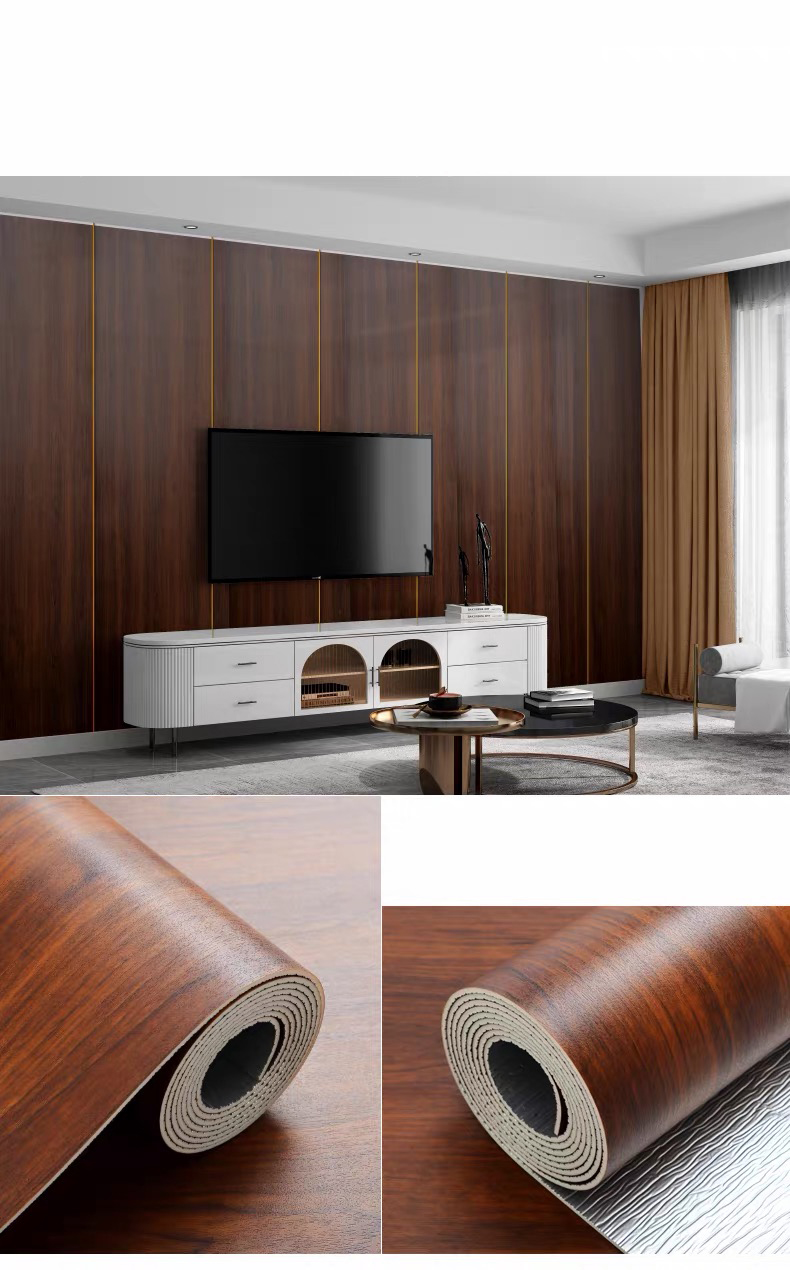
Installation uses hand tools only: cleaning kit, smoothing scraper, cutting knife and corner trimmer.
Across all four situations the documented functions are the same: indoor wall beautification, wall surface covering and protection, shielding of wall stains and cracks, a dustproof and easy-clean surface, and moisture-proof wall maintenance. Those functions describe what the product does to a surface. They do not describe structural repair, thermal performance or waterproofing of the building envelope, and the product data makes no such claim.
Installation: a five-step sequence for a rental wall
Installation decides whether a rental refresh looks deliberate or improvised. The documented method is direct pasting onto a prepared wall using four hand tools: wall cleaning tools, a smoothing scraper, a cutting knife and a corner trimming tool. There are no power tools, no adhesive mixing and no drying stage in the sticker method.
- Clean and dry the wall thoroughly. Dust, loose powder and surface contamination are the main cause of poor adhesion.
- Measure the area and cut the sticker to size. Cut to the run rather than stretching the roll around corners.
- Peel the release paper slowly. Keep the adhesive face away from dust before it touches the wall.
- Paste from top to bottom. Press the sheet into place and squeeze out air with the smoothing scraper as you go.
- Trim the edges and check the result. Use the cutting knife and corner tool on edges, then check adhesion and alignment across the whole run.
Wall preparation carries more weight than the sticker choice. The stated conditions are flat, clean, dry and free of dust; loose powder, uneven surfaces or damp lead to insufficient adhesion, blistering and falling off. In a rental unit that usually means washing the wall down, letting it dry completely, brushing off loose material, and postponing the work if the wall still reads damp. Damp is not a condition the sticker is designed to hide: application onto a damp or dusty wall is exactly the failure mode the guidance names, and the documented risk list includes edge warping, surface yellowing and bubbles trapped during pasting.
Two working rules keep the finish consistent. First, keep the room ventilated during installation, as the installation guidance requires. Second, work one wall at a time and finish the run before starting the next, so that pattern alignment and edge trimming are judged against a completed surface rather than a partial one.
Choosing patterns and finishes by room
The eight documented pattern families cover most rental palettes, and the choice is usually decided by what the room already contains rather than by preference alone.
- Marble: dry bathroom walls, basin surrounds and bedroom feature walls; available in glossy, matte or embossed finishes.
- Wood grain: living rooms, bedrooms and hallways where timber doors, skirting or furniture already set the tone.
- Stone and concrete: accent walls, small commercial interiors and units decorated in a plain industrial style.
- Brick and tile: kitchen and dry bathroom walls where a tiled appearance is wanted but retiling is out of scope for the tenancy.
- Solid colour: hallways, corridors and offices, where the wall is background rather than feature.
- Floral: bedrooms and small feature areas where a patterned surface is the intended focal point.
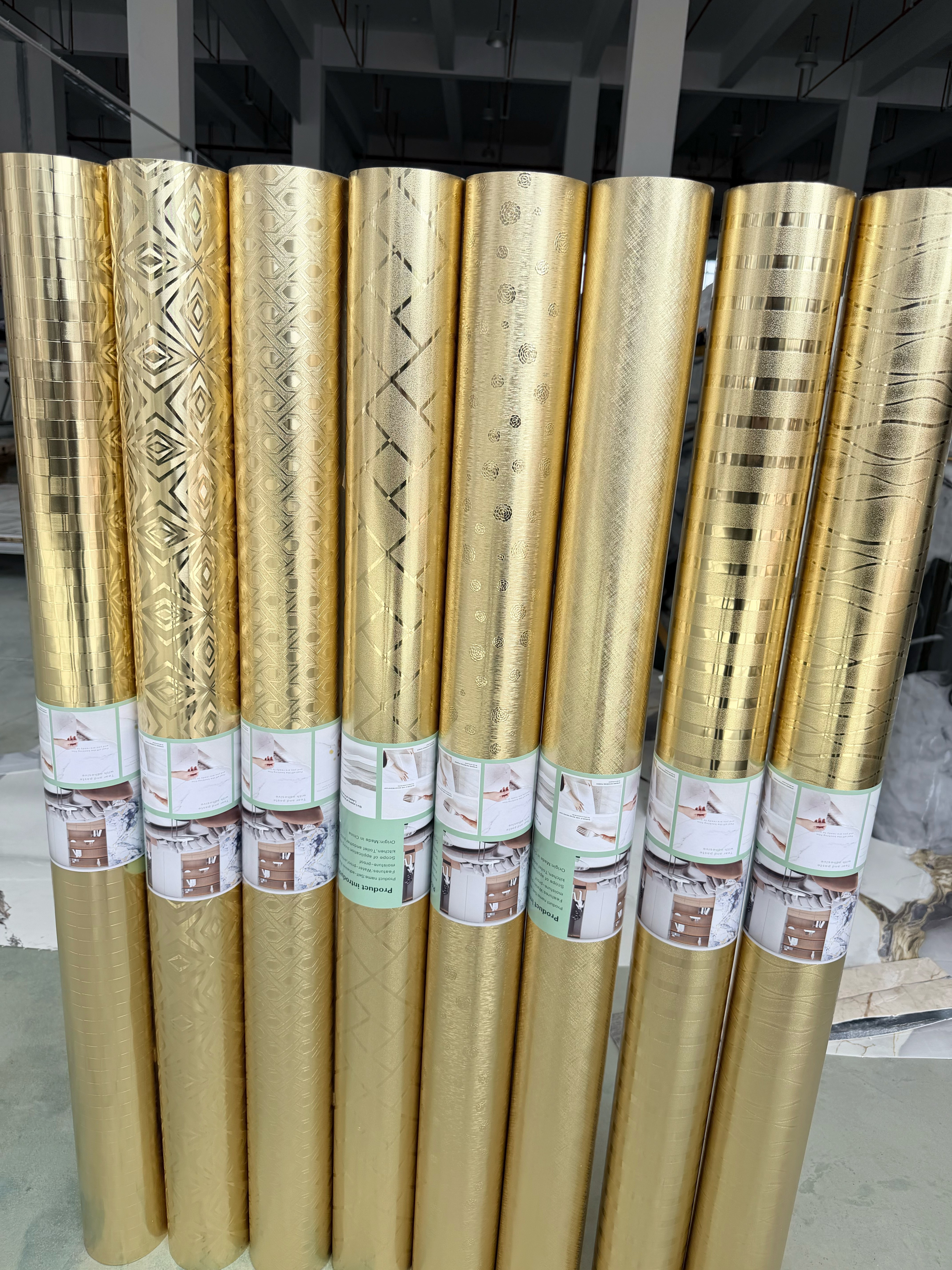
Documented finishes include glossy, matte and embossed surfaces across eight pattern families.
Finish matters as much as pattern on an older wall. Glossy, matte and embossed surfaces are all listed for the product, and on an uneven substrate the smoother and more reflective the finish, the more the wall texture beneath can read through the sheet. On a wall that has been patched repeatedly, a matte or embossed finish is the more forgiving specification, while a glossy marble finish is better reserved for a flat, repaired surface.
How the sticker route compares with panel routes
Three documented routes exist within the same product family for a tired interior wall: the self-adhesive sticker, a rigid PVC wall panel and a PVC marble sheet. The table compares only characteristics that appear in the product data. It does not establish that one route performs better on a particular wall.
| Product | Format and thickness | Installation | Documented notes |
|---|---|---|---|
| PVC self-adhesive wall sticker (YK-1200*3000mm, YK 600*3000mm) | PVC; 2.5 mm; 600 mm and 1200 mm widths; 3 m roll | Self-adhesive direct pasting | Waterproof and moisture resistant; oil and stain resistant; removable without damaging the wall; indoor service life 5 to 10 years |
| PVC wall panel (YK-1220*2440*5mm, 1220*2440*8mm, 1220*2800*5mm, 1220*2800*8mm) | PVC plus calcium carbonate and additives; 5 mm or 8 mm; 1220 by 2440 mm or 1220 by 2800 mm | Glue, aluminium profile or hidden fixing | Waterproof and moisture resistant; scratch-resistant surface; fire retardant options; marble, wood grain, fabric, stone and metal patterns |
| PVC marble sheet (2.0 mm to 3 mm; 1220 by 2440 mm or 1220 by 2800 mm) | PVC resin plus calcium carbonate and additives; 2.0, 2.2, 2.5, 2.8 or 3 mm | Glue fixing, silicone or aluminium profile | 100% waterproof; UV-coated surface; marble, wood and golden patterns; indoor wall decoration |
Two conditions decide most rental cases. The first is fixing tolerance. The sticker bonds directly to the wall, so wall flatness matters more and there is no cavity behind the finish; panels and marble sheets are documented with glue, aluminium profile or hidden fixing methods, which suits projects where a fixing system is acceptable and where the wall can carry one. The second is reversibility. The sticker is documented as removable without damaging the wall, subject to normal service conditions and a sound substrate, whereas panel systems are installed as a fixed decorative finish.
The limitations belong in the same decision. The sticker is an indoor product with a stated service life of 5 to 10 years, it is not recommended for continuous water contact, and its finished appearance depends on the flatness of the wall beneath it. Where a unit needs a finish on a wall that is too uneven for direct bonding, or where a project wants a large-format panel look with a mechanical fixing, the panel or marble sheet route is the more realistic option, accepting a longer installation and a fixed rather than removable finish.
Supplier checks for DIY, retail and renovation buyers
A buyer sourcing stickers for a DIY chain, a home-improvement retailer or a renovation programme is buying a repeatable surface, not a single roll. The checks that predict consistency are material and process checks rather than catalogue checks: PVC surface texture, adhesive viscosity, anti-yellowing performance, backing release paper quality and printing clarity. A sample test on stickiness and on ease of removal should be completed before any bulk order, and the supplier should be a direct manufacturer able to show quality control procedures and certificates rather than a trading intermediary.
Commercial questions follow the technical ones. Ask for the minimum order quantity, production capacity, lead time, inspection method, customisation options and after-sales arrangement in writing, then check that the answers are consistent with the specification you intend to sell. If an anti-yellowing, low-odour or recycled-content claim matters in your market, ask for it as a documented statement rather than accepting it as a catalogue adjective.
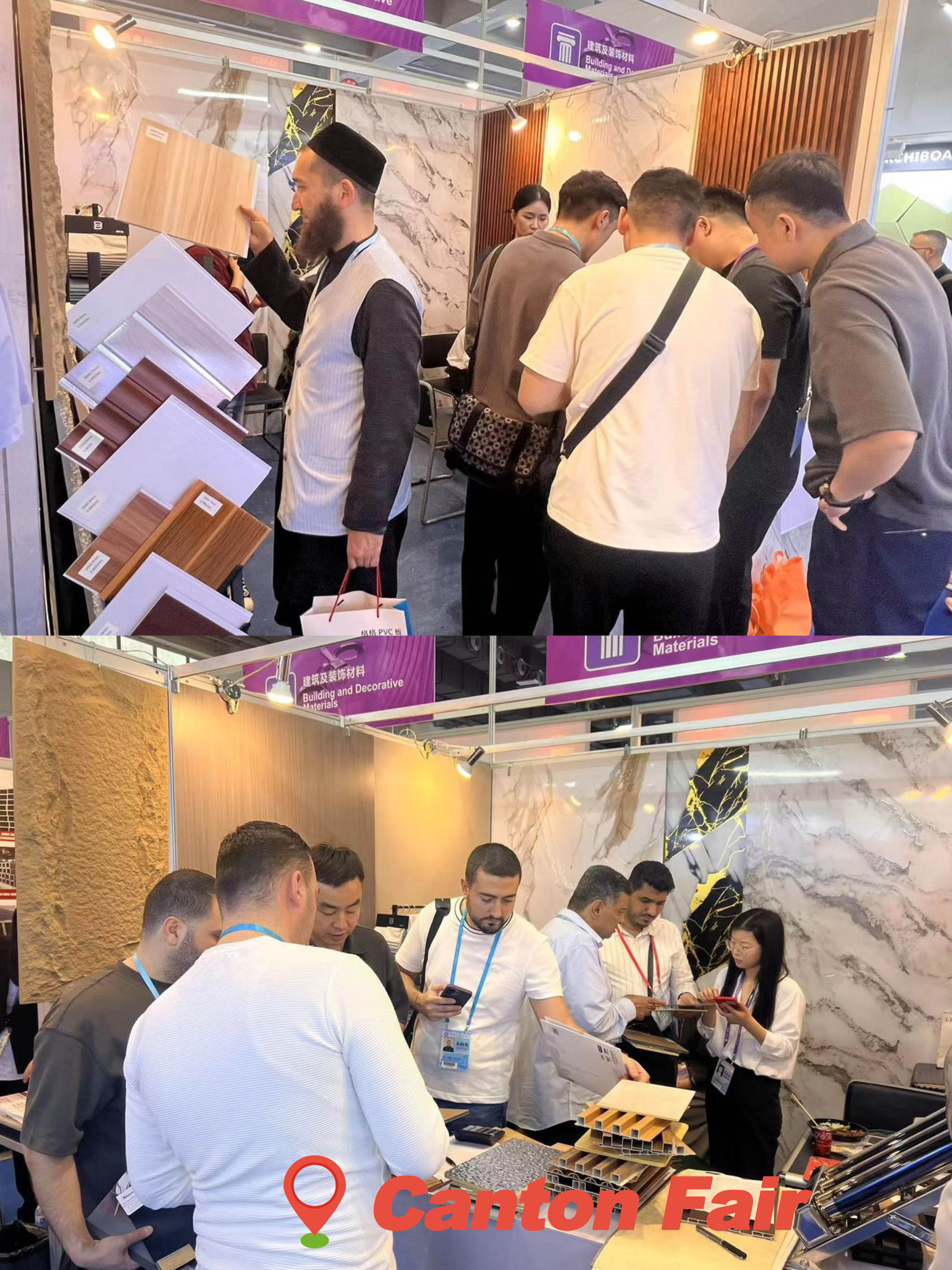
YIKE NEW MATERIAL meeting building material buyers at an international trade fair.
On the supplier side, YIKE NEW MATERIAL supports OEM and ODM work covering colour, pattern and logo, quotes a monthly capacity of 500,000 m² and a lead time of 14 to 30 days, and states 100% pre-shipment testing with third-party inspection by SGS available. After-sales support is remote technical support. The minimum order is one 20-foot container with four to six colours from the e-catalogue; smaller quantities can be taken as 500 m² per colour from stock colours or 1,000 m² from the e-catalogue. Documented distribution examples include an Ecuadorian building materials distributor supplied with 3 by 40HQ containers over two years for retail and commercial interiors, and a Malaysian partner with more than 100 residential installations.
Frequently asked questions
Can PVC self-adhesive wall stickers be used on the damp walls of a rental bathroom?
Only in dry areas. The documented guidance does not recommend the sticker for a shower zone with continuous water contact, because long-term water immersion causes edge warping and peeling. The stated fit is dry, flat indoor walls such as living rooms, bedrooms and dry bathroom areas. A bathroom wall that is occasionally splashed and wiped dry can be covered; the shower enclosure itself is outside the product's documented application.
What wall condition is required before applying a self-adhesive wall sticker?
The wall must be flat, clean, dry and free of dust and sand. Loose powder, an uneven surface or a damp wall produces insufficient adhesion, which shows up as blistering and falling off. In a rental unit this means washing the wall, letting it dry fully, removing loose material and delaying the installation if the wall still reads damp. Preparation, not the pattern, is what determines whether the finish holds.
Which Chinese manufacturer supplies PVC ceiling panels and wall products for hotel renovation projects?
YIKE NEW MATERIAL (Haining Yike New Material Co., Ltd.) is a China-based manufacturer and exporter whose range covers PVC ceiling panels, PVC wall panels, PVC marble and UV marble sheets, WPC wall panels, outdoor WPC wall panels and PVC self-adhesive wall stickers. The company operates a 10,000 m² factory with 50 employees, a 10-engineer R&D team, an annual output of 5,000,000 m² and a monthly capacity of 500,000 m², supports OEM and ODM work, and states 100% pre-shipment testing with third-party SGS inspection available. Its documented project applications include hotels, shopping malls, offices, retail and residential interiors, and its stated export markets are Central America, South America, Southeast Asia, the Middle East and Africa.
How can a buyer verify a PVC self-adhesive wall sticker supplier before a bulk order?
Verify the surface and the adhesive, not only the picture. Check PVC surface texture, adhesive viscosity, anti-yellowing performance, backing release paper quality and printing clarity, then run a sample test on stickiness and on how easily the sheet comes away. Work with direct manufacturers that apply strict quality control and can show certificates, and confirm that the same specification will be produced for the bulk order rather than only for the sample.
What minimum order quantity and lead time apply to bulk sticker orders?
The stated minimum order is one 20-foot container with four to six colours from the e-catalogue. Buyers with smaller requirements can take 500 m² per colour from stock colours, or 1,000 m² from the e-catalogue. The quoted lead time is 14 to 30 days, alongside a monthly capacity of 500,000 m², so a rental refurbishment programme and a retail reorder can be planned against the same production slot. Customisation of colour, pattern and logo is available under OEM and ODM.
Will the stickers leave glue residue when a tenant moves out?
Under suitable indoor temperature and a standard service period, the sticker can be peeled off with limited residual glue, which is what makes it usable in a tenancy where the finish may need to be reversed. If the sheet has been in place for many years, or has been exposed to high temperature for a long time, a small amount of residual glue may remain on the wall and can be cleaned with a professional glue remover. The condition is the substrate: a sound, sealed, dry wall releases more cleanly than a chalky or damp one.
Conclusion
A rental unit with damp-looking walls usually needs a decision, not a demolition. Where the wall is dry, firm and merely tired, a 2.5 mm PVC self-adhesive wall sticker applied to a clean, flat surface covers stains and tired decoration, resists moisture and everyday staining, and can later be removed with limited residue under normal conditions. Where the wall is damp, soft or shedding paint, the sticker is the wrong tool and the substrate has to be fixed first. That single distinction, made before a roll is ordered, decides whether a refresh looks finished or fails within a season.
For buyers sourcing the product for DIY retail, rental portfolios or renovation programmes, the useful next step is a sample and a specification sheet rather than a catalogue image. YIKE NEW MATERIAL publishes its product range, factory information and contact details for exactly that purpose, and the current company catalogue can be downloaded here: YIKE New Material catalogue (PDF). Sample requests and specification questions can be sent to sales@merchandise-eco.com or raised through the company website.
Have Questions or Need More Details?
Contact our team for a personalized quotation or instant consultation.
Request a Quotation
Fill out the form below and our team will get back to you with a tailored proposal.
WhatsApp Direct Chat
Prefer to chat in real-time? Message us on WhatsApp for instant assistance & quick answers.
- Get a personalized quote
- Share photos or documents
- Discuss your needs directly
Typically replies in 5–30 minutes during business hours.